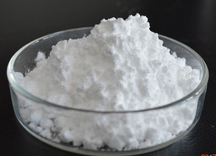
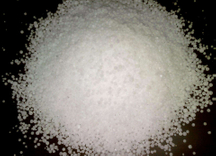
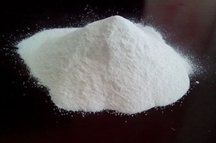
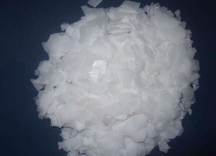
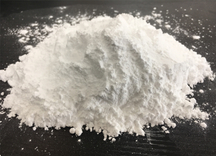
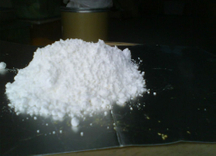
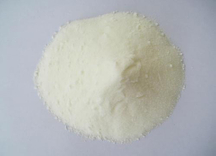
Sodium nitrite is an inorganic compound represented by the chemical formula NaNO2, manifesting as a white to slight yellowish crystalline powder that serves as a multi-functional industrial agent, an effective corrosion inhibitor, a crucial metallurgical treatment component, and an essential chemical intermediate across diverse manufacturing sectors globally. High Purity Sodium Nitrite provides superior performance and stability in synthetic chemistry, dye manufacturing, heat transfer applications, and professional wastewater treatment systems requiring precise formulation and strict adherence to technical industry standards.
Table of Contents
Choose Tainuo —Your #1 Sodium Nitrite Supplier
Sodium Nitrite’s Structure
Properties of Sodium Nitrite
Major Industrial Applications of Sodium Nitrite
Get Industry-Grade Sodium Nitrite at Kraft Chemical
Choose Tainuo —Your #1 Sodium Nitrite Supplier
Choosing a certified technical supplier guarantees access to consistent High Purity Sodium Nitrite that fulfills exact industrial specifications and operational requirements across global supply chains.
In modern industrial manufacturing, the purity of chemical raw materials directly dictates the efficiency and safety of downstream processes. Selecting a reliable production partner ensures that the compound remains free from unwanted contaminants that could potentially compromise heavy machinery or alter complex chemical syntheses. Enterprises involved in metallurgy, polymer production, and textile coloration rely on rigorous quality assurance protocols to guarantee continuous material flow without unexpected batch failure.
When procurement managers seek dependable chemical sources, they prioritize consistent particle size distributions, moisture control, and precise packaging standards that protect against environmental degradation. Utilizing premium grade chemicals mitigates technical risks, enhances process repeatability, and reduces operational overhead caused by secondary purification steps. High-tier industrial operations demand comprehensive documentation, batch traceability, and steady logistical support to sustain rapid global distribution networks.
For operations requiring superior standard formulations, utilizing High Purity Sodium Nitrite remains essential for maintaining compliance with international safety and performance criteria. Advanced processing plants incorporate specialized separation tech and state-of-the-art crystallization methods to produce consistent, high-yield material that satisfies the most demanding commercial sectors. By integrating top-tier chemical supplies, industrial organizations optimize their output while safeguarding critical technical assets.
Supply Specifications and Delivery Parameters
Parameter Specification
Industrial Standard Value
Premium Grade Threshold
Primary Purity (NaNO2 Dry Basis)
Greater than or equal to 99.0%
Greater than or equal to 99.3%
Sodium Nitrate Impurity (NaNO3)
Less than or equal to 0.8%
Less than or equal to 0.5%
Moisture Content
Less than or equal to 1.5%
Less than or equal to 1.0%
Water Insoluble Matter
Less than or equal to 0.05%
Less than or equal to 0.03%
Chloride Content (as Cl)
Less than or equal to 0.10%
Less than or equal to 0.05%
Sodium Nitrite’s Structure
The chemical structure of High Purity Sodium Nitrite features a clear ionic configuration consisting of sodium cations linked structurally with planar nitrite anions that display distinct delocalized electron distributions.
At the molecular level, the compound possesses an orthic crystal system configuration that dictates its physical behavior and interactions with other industrial compounds. The nitrite anion comprises a central nitrogen atom bound to two distinct oxygen atoms, creating a bent molecular geometry with an approximate bond angle of 115 degrees. This specific structural layout generates an asymmetric distribution of electrical charge, which fundamentally contributes to its high chemical reactivity and its strong affinity for polar solvents.
The chemical bonds established between the central nitrogen atom and the peripheral oxygen atoms possess equal lengths due to resonance stabilization, which means the negative charge is distributed evenly across the anion framework. This structure allows the compound to act effectively as both an oxidizing agent and a reducing agent depending on the environmental pH and the presence of specific co-reactants. Understanding these intrinsic structural arrangements enables chemical engineers to predict exact behavioral patterns during complex industrial transformations.
The stability of the crystal lattice structure in High Purity Sodium Nitrite ensures that the material retains its physical integrity under dry ambient storage conditions, preventing rapid decomposition before implementation. This ionic setup allows for efficient dissociation in liquid systems, releasing highly active nitrite ions that instantly participate in surface passivating reactions or diazotization sequences. This structural predictability makes it an indispensable component in precise chemical processing setups.
Crystallographic and Structural Breakdown
Structural Attribute
Technical Characteristic Description
Empirical Formula
NaNO2
Molecular Symmetry Block
Bent planar geometry within an orthorhombic lattice space
Anion Bond Angle
Approximately 115.4 degrees between oxygen vectors
Bond Length Values
Identical nitrogen-oxygen distance of 124 picometers
Coordination Environment
Six-coordinate sodium cations surrounding the localized anions
Properties of Sodium Nitrite
High Purity Sodium Nitrite exhibits specific thermal stability limits, high solubility profiles in aqueous matrices, and strong alkaline characteristics when dissolved completely within industrial processing water.
The compound appears as an odorless, hygroscopic crystalline substance that easily absorbs atmospheric moisture if left unsealed, highlighting the absolute necessity of controlled industrial warehousing. It has a high density and possesses a distinct melting point, beyond which it undergoes rapid thermal decomposition, releasing nitrogen oxide gasses and forming sodium oxide compounds. Its exceptional solubility in water makes it highly efficient for liquid blending, ensuring rapid dispersal within large-scale industrial blending tanks.
Aqueous solutions containing the compound display a slightly alkaline pH level because the nitrite anion undergoes partial hydrolysis, releasing a controlled concentration of hydroxyl ions. When exposed to strong acidic environments, the material reacts immediately to produce nitrous acid, a volatile compound that serves as a key driver in organic synthesis workflows. Because it exhibits diverse chemical behavior across different pH scales, operators can customize reaction environments to fit specific requirements, whether preventing oxidation or initiating organic couplings.
Using certified High Purity Sodium Nitrite guarantees that physical properties like electrical conductivity, dissolution rate, and thermal absorption remain entirely uniform across successive manufacturing lots. Eliminating unexpected fluctuations in chemical properties safeguards sensitive automated machinery and prevents variance in finished industrial products. This level of physical and chemical predictability provides key technical benefits for quality-driven manufacturers globally.
Working Principle and Storage Safety: The material operates as a powerful oxidation controller by forming a protective passivating oxide film on bare metallic surfaces, preventing oxygen molecules from contacting and degrading the underlying iron matrix. To preserve these chemical capabilities and prevent premature clumping, the compound must be stored in tightly sealed, moisture-proof containers located in dry, well-ventilated corporate environments, completely isolated from strong organic reducers, flammable materials, and concentrated mineral acids.
Major Industrial Applications of Sodium Nitrite
The primary commercial implementations of High Purity Sodium Nitrite span industrial metal finishing, dye intermediate manufacturing, specialized heat transfer fluids, and large-scale wastewater treatment protocols.
In modern metallurgical processing, the compound plays a fundamental role as an inorganic corrosion inhibitor designed to protect cast iron and mild steel elements from surface degradation during intermediate manufacturing steps. When integrated into aqueous metalworking solutions, it actively modifies the electrochemical potential of metal parts, facilitating the rapid development of a stable, microscopic gamma-ferric oxide layer that blocks moisture and atmospheric oxygen. This passivation mechanism extends the shelf life of semi-finished industrial components, reducing scrap rates and lowering overall re-work costs across automotive and heavy machinery manufacturing plants.
The synthetic dye industry relies on this material as an indispensable chemical reagent required to execute diazotization reactions, which form the structural backbone of azo dyes and organic pigments used in textiles, printing inks, and specialized polymers. By reacting with primary aromatic amines under controlled, low-temperature conditions, the compound generates highly active diazonium salts that serve as precursors for bright, fade-resistant colorants. This process demands extremely consistent purity inputs, as minor structural or chemical impurities can distort color profiles, reduce dye yield, or compromise product safety in commercial consumer markets.
Another major industrial application involves using High Purity Sodium Nitrite within specialized molten salt mixtures optimized for high-temperature heat transfer and thermal energy storage systems, such as solar thermal power plants and industrial chemical reactors. Blending this compound with sodium nitrate and potassium nitrate creates a low-melting eutectic fluid that remains thermally stable at elevated operational temperatures, allowing for efficient heat distribution without high system pressure. Additionally, it plays an essential role in municipal and industrial wastewater treatment, functioning as a specialized nutrient source or electron acceptor to accelerate biological denitrification and control odor emissions in large-scale remediation facilities.
Industrial Application Allocation and Operational Uses
Metallurgy & Machining
Primary Technical Functional Use Case: Anticorrosive bath additions and wire drawing lubrication coatings.
Operational Value and Benefit: Forms a permanent passivation layer to prevent rust during storage.
Chemical Synthesis
Primary Technical Functional Use Case: Diazotization reagent for organic azo dye coupling sequences.
Operational Value and Benefit: Enables reliable formulation of bright, stable industrial colorants.
Thermal Engineering
Primary Technical Functional Use Case: Component within low-melting eutectic molten heat transfer salts.
Operational Value and Benefit: Optimizes heat storage capacity in modern green energy plants.
Wastewater Treatment
Primary Technical Functional Use Case: Biological denitrification agent and hydrogen sulfide gas countermeasure.
Operational Value and Benefit: Eliminates hazardous odor compounds and improves effluent metrics.
Polymer & Rubber
Primary Technical Functional Use Case: Polymerization chain terminator and rubber processing accelerator.
Operational Value and Benefit: Controls polymer weight and enhances elastomer durability profiles.
Get Industry-Grade Sodium Nitrite at Kraft Chemical
Acquiring premium commercial chemicals requires partnering with verified distributors capable of supplying high-yield formulations under strict quality control conditions.
Industrial procurement teams must evaluate chemical suppliers based on their capacity to provide comprehensive technical data sheets, consistent material properties, and secure packaging designs that prevent environmental degradation during transit. Industrial grade compounds must undergo strict verification to ensure that trace contaminants, like heavy metal impurities or high nitrate levels, stay well within acceptable industry limits. Securing reliable supply agreements shields commercial operations from sudden material shortages, price volatility, and manufacturing delays caused by inconsistent raw inputs.
When implementing technical salts in complex production lines, keeping precise tracking documentation for every batch ensures full compliance with international safety and quality standards, including ISO protocols. Certified logistics partners use specialized transport vehicles and secure containment structures to prevent moisture exposure, which can cause severe clumping and complicate automated dry-feeding operations. Investing in top-tier chemical supplies helps operations reduce waste, maximize throughput, and achieve superior finish quality across diverse manufacturing environments.
Integrating verified technical inputs, such as premium grade chemical salts, provides chemical blending plants and surface treatment facilities with a competitive edge by lowering maintenance costs and minimizing system downtime. Organizations can implement automated dosing systems with complete confidence, knowing that the chemical properties and concentration values remain uniform from batch to batch. This consistent operational performance underscores the value of sourcing high-grade chemical inputs from specialized industrial distributors.
Provides basic technical readouts and limited batch data
Delivers complete certificates of analysis with every shipment
Contaminant Control Levels
May contain trace insoluble matter up to 0.10%
Guarantees low insoluble levels below 0.03% for clear processing
Conclusion
In summary, the compound represents a foundational asset across modern industrial sectors, working as a high-performance corrosion inhibitor, a critical reactant in organic synthesis, and a specialized medium for high-temperature thermal regulation. The structural stability and physical properties of the compound dictate its versatile functionality, making it essential for processing systems requiring exceptional chemical precision. Ensuring a reliable supply of high-grade raw materials allows global manufacturing organizations to maximize production efficiency, improve product longevity, and maintain full compliance with rigorous regulatory quality standards across all business operations.
Melamine presents alkalescence, can react with various acidums to generate melamine salt. In strong acid or strong alkali liquor, melamine will hydrolyze---amidocyanogen will be slowly replaced by hydroxyl, thus generate cyanuric acid diacid amide, cyanuric acid monamide, and cyanuric acid. Among them, the reaction of melamine and formalin is the most important part.
Product name:Sodium Hydroxid/Caustic Soda Molecular formula:NaOH Molecular weight:39.996 CAS NO.:1310-73-2 Appearance:White or light yellow shiny solids UN number:1824,1823
Melamine presents alkalescence, can react with various acidums to generate melamine salt. In strong acid or strong alkali liquor, melamine will hydrolyze---amidocyanogen will be slowly replaced by hydroxyl, thus generate cyanuric acid diacid amide, cyanuric acid monamide, and cyanuric acid. Among them, the reaction of melamine and formalin is the most important part.
CAS NO.7632-00-0 Chemical formula:NaNO2 Appearance:White or slightly yellowish solid. Uses:Mainly used in the pharmaceutical and chemical industries and can also be used in heat treatment of metal,early strength agent of cement,antifreezing agent,and etc. Packing:1000kg/bag,50kg/bag,25kg/bag