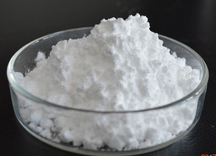
Commercial sodium nitrite typically features a minimum purity level of 99% for industrial grade applications, ensuring high efficiency and minimal impurities for sensitive chemical processes.
At a Glance
Section
Summary
Understanding the Purity Standards of Commercial Sodium Nitrite
Explores the baseline 99% purity standard for industrial applications and why high purity is vital for consistent results.
Key Industrial Applications of High Purity Sodium Nitrite
Details how various sectors like metallurgy, dye manufacturing, and water treatment utilize this high-grade chemical compound.
Technical Specifications and Composition Matrix
Provides a detailed breakdown of chemical properties, moisture content, and allowed trace impurities in commercial grades.
Safety Handling and Storage Guidelines for Industrial Sodium Nitrite
Outlines critical handling protocols, storage conditions, and safety measures required to maintain product integrity.
Understanding the Purity Standards of Commercial Sodium Nitrite
Commercial sodium nitrite must maintain a strict purity level of at least 99% to be considered suitable for standard industrial manufacturing and chemical synthesis.
When purchasing raw materials for large-scale production, understanding chemical composition is paramount. Industrial sectors rely heavily on stable compounds that do not introduce unpredictable side reactions. Standard commercial variants deliver exactly this predictability by keeping active ingredient concentration at maximum levels while limiting moisture and water-insoluble matter.
Choosing a premium alternative like High Purity Sodium Nitrite ensures that your downstream manufacturing experiences fewer batch failures. Lower grade options often contain elevated trace levels of heavy metals or moisture, which can alter pH balances or cause unwanted precipitation during formulation.
The Impact of Impurities on Industrial Efficiency
In bulk chemical supply chains, even a half-percent variance in compound concentration alters production outcomes. Sodium nitrate and moisture are the most common secondary substances found within the compound matrix. By maintaining strict control over crystallization and refining processes, manufacturers ensure that every batch exhibits consistent crystalline form and reactivity.
Key Industrial Applications of High Purity Sodium Nitrite
High purity sodium nitrite serves as a critical functional agent across multiple diverse fields, including metallurgy, dye synthesis, and industrial water treatment systems.
1. Metallurgy and Metal Surface Treatment
In the metalworking sector, this chemical serves as an exceptional corrosion inhibitor. It forms a protective passive oxide film over steel and iron surfaces, effectively halting oxidative degradation during processing and storage. This passivation technique is crucial for automotive parts, structural steel elements, and machined components awaiting final assembly.
2. Synthetic Dye and Pigment Production
The textile and coloration industry utilizes the compound primarily for diazotization processes. It acts as a foundational building block for manufacturing azo dyes, which require precise molecular ratios. Utilizing a premium raw material like High Purity Sodium Nitrite guarantees that dye colors remain vibrant, stable, and highly uniform across different manufacturing cycles.
3. Industrial Water Treatment and Heat Transfer
Closed-loop cooling towers and industrial boilers frequently require chemical additives to prevent internal pipe decay. By introducing this compound into water circulation loops, facilities mitigate rust build-up along interior tube walls. This maximizes thermal transfer efficiency while lowering maintenance overhead and preventing structural failures within high-pressure machinery systems.
Technical Specifications and Composition Matrix
The comprehensive technical profile of commercial grade sodium nitrite demonstrates a reliable distribution of components designed to satisfy strict industrial quality metrics.
To appreciate the functional capacity of this chemical compound, procurement managers must evaluate detailed parameter sheets. The balance between active sodium nitrite and minimal trace elements dictates how the material behaves under extreme thermal or reactive conditions.
Parameter Criterion
Industrial Grade Specification
Sodium Nitrite ($NaNO_2$) Content
$\ge$ 99.0%
Sodium Nitrate ($NaNO_3$) Content
$\le$ 0.8%
Moisture ($H_2O$) Content
$\le$ 1.4%
Water Insoluble Matter
$\le$ 0.05%
Appearance
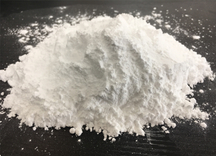
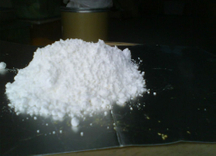
White or Slightly Yellowish Crystal
Understanding the Chemical Dynamics
Reviewing analytical data reveals why selecting the right grade impacts chemical formulation. For example, utilizing High Purity Sodium Nitrite ensures that water-insoluble matter remains negligible, preventing filter clogging in automatic dosing equipment.
Safety Handling and Storage Guidelines for Industrial Sodium Nitrite
Proper storage and handling protocols are mandatory to safeguard personnel and protect the high purity status of commercial sodium nitrite from environmental degradation.
Because this chemical possesses strong oxidizing characteristics, it reacts vigorously when exposed to incompatible substances. Contact with reducing agents, flammable organic matter, or strong acids can prompt rapid decomposition or hazardous gas release. Consequently, facility managers must enforce rigorous workplace guidelines regarding storage layout and operational handling.
Investing in High Purity Sodium Nitrite means protecting your capital investment through proper inventory control. Because the material is hygroscopic, exposure to ambient humidity leads to clumping and moisture absorption, reducing the overall concentration value over extended periods.
Facility Layout and Environmental Control
Storage areas should feature dedicated dry zones equipped with effective ventilation systems. Keep chemical bags tightly sealed on pallets raised off the warehouse floor to prevent moisture migration from concrete surfaces.
Storage Maintenance Protocol: Store containers in a cool, well-ventilated warehouse away from direct sunlight, heat sources, and combustible materials. Ensure that regular inspection intervals check for bag tears or seals compromised by ambient humidity.
Conclusion
Commercial sodium nitrite with a 99% purity standard remains an indispensable asset for modern industrial operations. From its role in preventing structural rust to acting as a vital reactant in synthetic chemistry, its performance depends directly on the elimination of internal impurities. Maintaining strict compliance with storage standards and picking high-grade raw components ensures optimal workflow efficiency, safer operations, and elite product outputs across every manufacturing application.
Melamine presents alkalescence, can react with various acidums to generate melamine salt. In strong acid or strong alkali liquor, melamine will hydrolyze---amidocyanogen will be slowly replaced by hydroxyl, thus generate cyanuric acid diacid amide, cyanuric acid monamide, and cyanuric acid. Among them, the reaction of melamine and formalin is the most important part.
Product name:Sodium Hydroxid/Caustic Soda Molecular formula:NaOH Molecular weight:39.996 CAS NO.:1310-73-2 Appearance:White or light yellow shiny solids UN number:1824,1823
Melamine presents alkalescence, can react with various acidums to generate melamine salt. In strong acid or strong alkali liquor, melamine will hydrolyze---amidocyanogen will be slowly replaced by hydroxyl, thus generate cyanuric acid diacid amide, cyanuric acid monamide, and cyanuric acid. Among them, the reaction of melamine and formalin is the most important part.
CAS NO.7632-00-0 Chemical formula:NaNO2 Appearance:White or slightly yellowish solid. Uses:Mainly used in the pharmaceutical and chemical industries and can also be used in heat treatment of metal,early strength agent of cement,antifreezing agent,and etc. Packing:1000kg/bag,50kg/bag,25kg/bag